Unified Ticketing Engine
Single pane of glass for incidents, requests, and changes.
Orqit binds incidents, assets, approvals, and governance into a single execution graph, letting operators see cause-and-effect before a breach spreads.
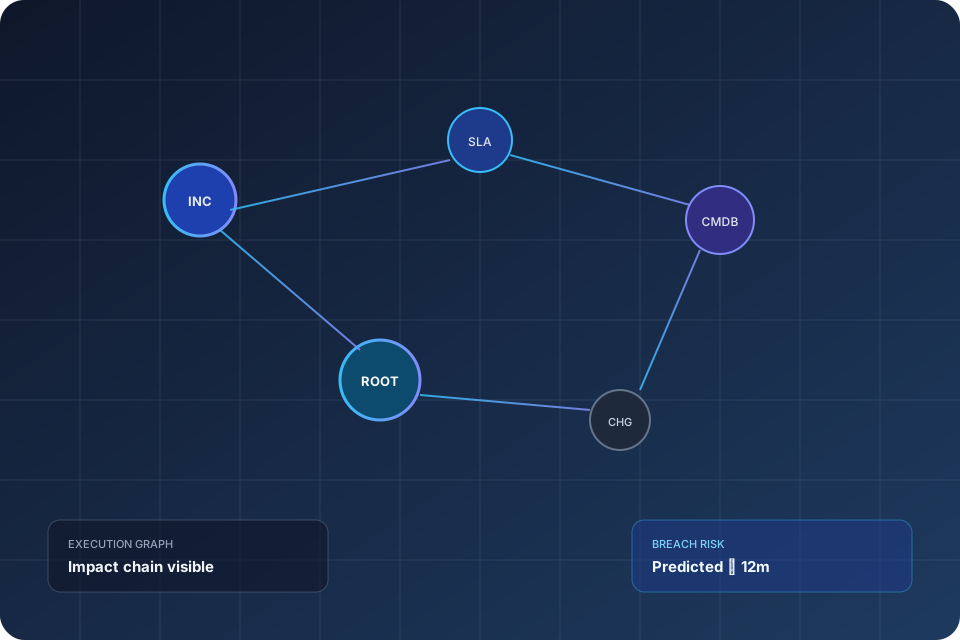
Orqit transforms traditional ITSM into an operational intelligence hub that couples incident lifecycle automation with AI-driven recommendation engines, delivering measurable SLA improvement while satisfying governance requirements.
Orqit replaces disjointed ticket, asset, and change silos with an execution-aware data model. When a high-severity incident arrives, the platform instantly correlates the ticket with every dependent asset, pending approval, and SLA exposure. The orchestration engine then presents the operator with the full impact chain—not just the symptom—so remediation can be directed at the root cause before the incident propagates.

Enterprise-ready ITSM for operations leaders, service desk managers, and CIOs accountable for SLA compliance.
Single pane of glass for incidents, requests, and changes.
Policy-driven rules that adapt to workload and severity.
Contextual knowledge base and auto-suggested work-arounds.
Real-time dashboards with breach prediction.
Immutable logs for compliance audits.
A user reports via the portal; the ticket is automatically linked to affected configuration items and open change requests.
The orchestration engine evaluates asset ownership, SLA exposure, and pending approvals, then routes to the responsible team.
The AI co-pilot surfaces related incidents, configuration drift, and compliance flags so technicians address underlying cause.
Before closure, the system verifies remediation time against the SLA contract and flags breach risk for escalation.
Completed tickets auto-generate remediation playbooks attached to assets and shared with the change advisory board.
Operators resolve incidents with a clear view of impact, eliminating time-consuming chase-downs.
Manual triage is replaced by automation that directs the right remediation step.
Reporting emerges from immutable audit trails—no separate reporting effort.
Shorter mean-time-to-detect gives teams headroom before breaches escalate.
The AI co-pilot analyzes incident description, cross-references asset state, SLA commitments, and policy constraints, then surfaces the most relevant remediation actions that already satisfy governance checkpoints.
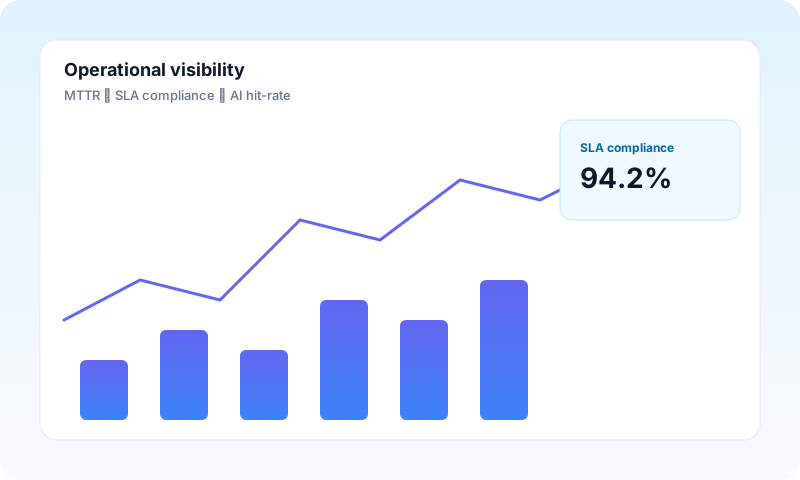
Custom dashboards display incident volume, mean time to resolve (MTTR), SLA compliance trends, and AI recommendation hit-rate.
 Microsoft Teams
 Slack
Slack
 ServiceNow
 Jira
Jira
 CMDB connectors
Yes – policies trigger alerts and auto-escalations when breach risk is detected.
All AI processing occurs within the Orqit VPC; no raw ticket data leaves the tenant environment.
Launch a pilot workspace or book a walkthrough with our team.