Project Management
From roadmap to reality – Orqit drives project execution at scale
AI-guided planning, automated workflow sync, and enterprise governance in one unified hub.
Strategic positioning
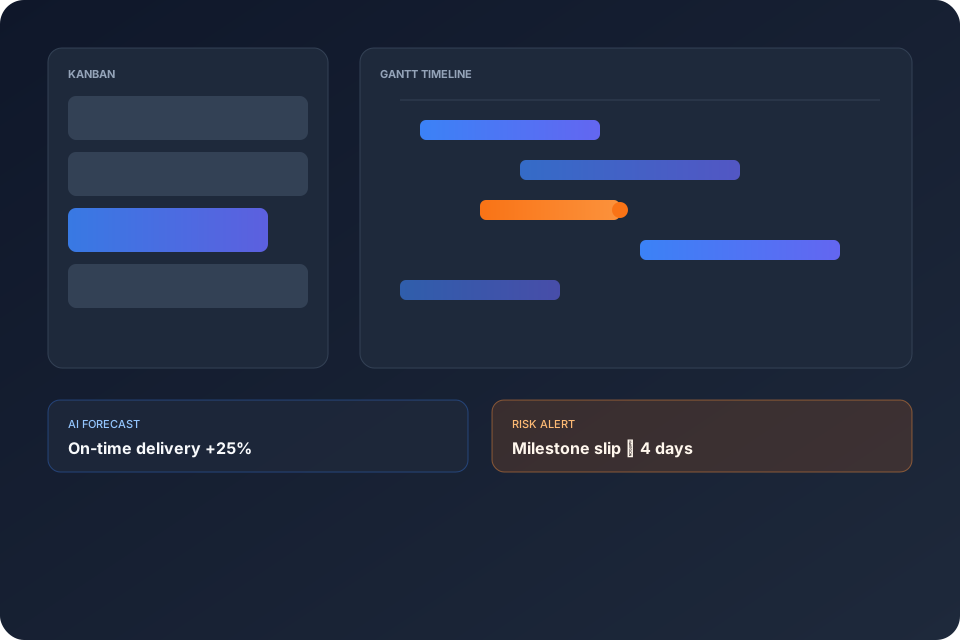
Orqit elevates traditional project tools into an execution intelligence platform where AI predicts delivery risk, automatically aligns tasks with operational policies, and surfaces real-time insights for stakeholders.
Who this is for
- Program managers overseeing multi-team initiatives
- Scrum masters and Agile coaches needing transparent progress tracking
- Portfolio managers aligning projects with business outcomes
Operational pain points
-
Siloed task tools Misaligned dependencies when teams track work in disconnected systems.
-
Stale status dashboards Manual updates leave leadership acting on outdated progress reports.
-
Weak delivery forecasts Difficulty predicting dates across distributed teams and portfolios.
-
Hidden portfolio risk Limited visibility into risk exposure across complex program interlocks.
Execution-aware ITSM
See the full impact chain—not just the symptom
The module blends Kanban, Gantt, and backlog management into a single data model. AI extracts dependencies from issue descriptions, proposes realistic timelines, and alerts when resource constraints threaten milestones. Integrated with ITSM and Asset Management, project health is linked to operational impact.

Capabilities
Platform capabilities
Integrated PM for program managers, Scrum masters, and portfolio leaders aligning delivery with business outcomes.
Hybrid Planning View
Kanban board and Gantt timeline in one hybrid workspace.
AI-Driven Forecasting
Predictive delivery dates based on velocity and risk factors.
Cross-Module Linkage
Tie tasks to incidents, assets, and approvals in one graph.
Resource Allocation Engine
Auto-balance workloads across teams with live capacity signals.
Governance Controls
Mandatory approval gates for budget and scope changes.
Workflow examples
How incidents move through Orqit
-
1
Initiate Project
Define scope and attach business objectives with stakeholder-ready templates.
-
2
Define Milestones
AI suggests realistic dates based on historical velocity and risk posture.
-
3
Link Tasks to Assets
Associate servers, licenses, and configuration items required for each milestone.
-
4
Automatic Status Sync
When an incident opens, related project tasks update without manual reconciliation.
-
5
Risk Alert
AI flags schedule slip risk and triggers mitigation workflows for accountable owners.
Operational benefits
Outcomes your teams will feel
On-time delivery
Measurable improvement in milestone attainment across portfolios.
Less reporting overhead
Live dashboards replace weekly status slide preparation.
Unified stakeholder view
One portfolio lens reduces alignment meeting time.
Operational KPI linkage
Correlate project outcomes with service desk and asset health metrics.
Governance & security
Built for audit and least-privilege
- Role-based policy enforces who can approve budget or scope changes.
- All project audit logs are cryptographically signed for tamper-evidence.
- Integration with enterprise SSO ensures secure access control.
AI usage
Co-pilot within your guardrails
AI parses task descriptions to auto-detect dependencies, suggests resource assignments, and forecasts potential bottlenecks before they threaten milestones.
Analytics visibility
Operational dashboards that executives trust
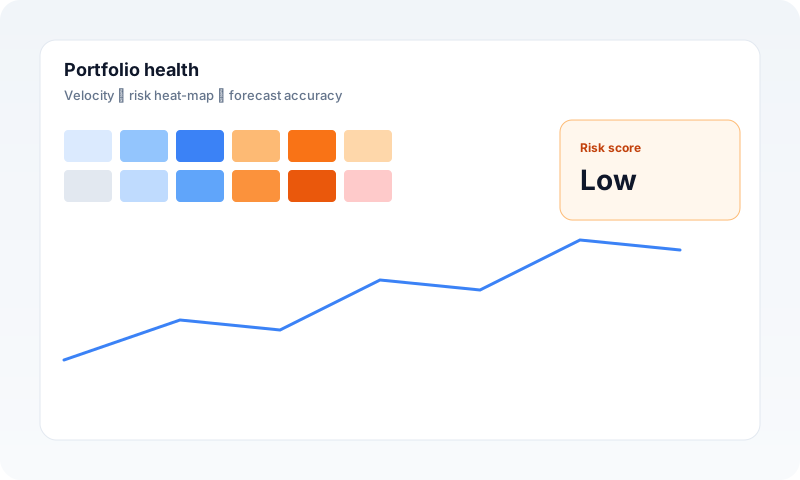
Executive dashboards display portfolio health, velocity trends, risk heat-maps, and AI forecast accuracy.
Integrations
Connects to your stack
 Jira
Jira
 Microsoft Azure DevOps
 GitHub
 Slack
Slack
 Microsoft Teams
FAQ
Common questions
Can the AI forecast be overridden?
Yes – project leads can accept, edit, or reject AI suggestions.
Does Orqit support multiple methodologies?
The module is methodology-agnostic; you can run Scrum, Kanban, or Waterfall.
Ready to modernize IT operations?
Launch a pilot workspace or book a walkthrough with our team.