Workflow Automation
When isolated scripts fail, operational delays cascade
Orqit stitches together systems, policies, and approvals into a single execution fabric, turning ad-hoc hand-offs into coordinated flows.
Strategic positioning
Orqit provides a low-code, policy-centric automation platform where AI suggests optimal flow configurations, monitors execution, and automatically remediates deviations.
Who this is for
- Operations engineers building repeatable processes
- Business analysts designing end-to-end service flows
- IT leadership seeking compliance-by-design automation
Operational pain points
-
Manual hand-offs Error-prone transfers between systems slow delivery and hide state.
-
No execution visibility Teams cannot see where a cross-system process stands in real time.
-
Inconsistent policy enforcement Security and governance rules applied unevenly across tools.
-
Repetitive admin toil High operational cost for tasks that should be automated.
Execution-aware ITSM
See the full impact chain—not just the symptom
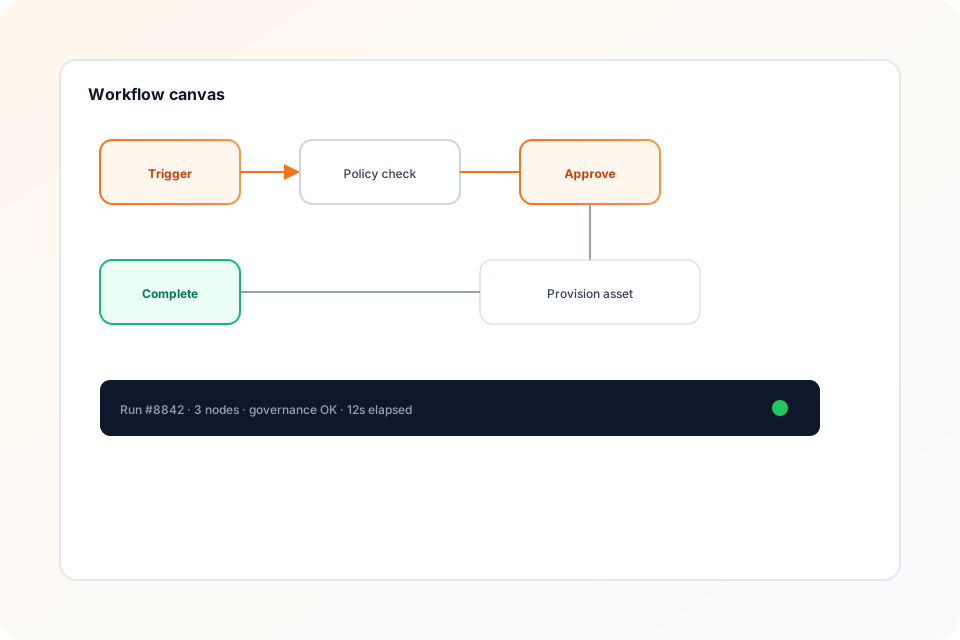
Operators use a visual canvas to compose a graph where each node represents a policy-driven action, a data source, or a governance checkpoint. When a trigger fires—be it a new ticket, an asset state change, or a scheduled event—the orchestration engine evaluates the full dependency chain, enforces compliance at each step, and surfaces any cross-system risk before the workflow proceeds.

Capabilities
Platform capabilities
Policy-centric automation for operations engineers, business analysts, and IT leaders who need compliance-by-design orchestration.
Visual Low-Code Builder
Drag-and-drop canvas with reusable components.
Event-Driven Triggers
React to tickets, asset changes, or external webhooks.
Policy-Guided Paths
Branches evaluated against governance before transitions proceed.
Policy Enforcement Engine
Embed compliance rules that auto-reject non-conforming actions.
Execution Monitoring
Real-time run-books, logs, and retry capabilities.
Workflow examples
How incidents move through Orqit
-
1
On-Board New Employee
HR event triggers asset provisioning, ITSM request, and manager/security/finance approvals before access.
-
2
Incident Escalation
SLA breach risk auto-generates approval, notifies senior engineers, and enforces governance before escalation.
-
3
License Renewal
Expiring licenses initiate purchase workflow with finance and legal sign-off, then update the asset registry.
-
4
Security Patch Deployment
Vulnerability scan validates staging, orchestrates deployment, and logs each step for audit.
Operational benefits
Outcomes your teams will feel
No idle hand-offs
Orchestration moves work from trigger to outcome without manual wait time.
Governance-driven checkpoints
Replace ad-hoc approvals with policy gates at every transition.
Immutable audit trail
Every step recorded for regulators without extra preparation.
Cross-system visibility
Anticipate downstream impact and prevent cascading failures.
Governance & security
Built for audit and least-privilege
- All workflow definitions reside in an immutable ledger; each change is signed and versioned.
- Role-based execution permissions enforce least-privilege at every node.
- Sensitive data within workflow steps is encrypted end-to-end.
AI usage
Co-pilot within your guardrails
The AI co-pilot surfaces execution bottlenecks, suggests additional governance checkpoints, and recommends optimal step ordering based on historic run data—all within the operator-driven workflow.
Analytics visibility
Operational dashboards that executives trust
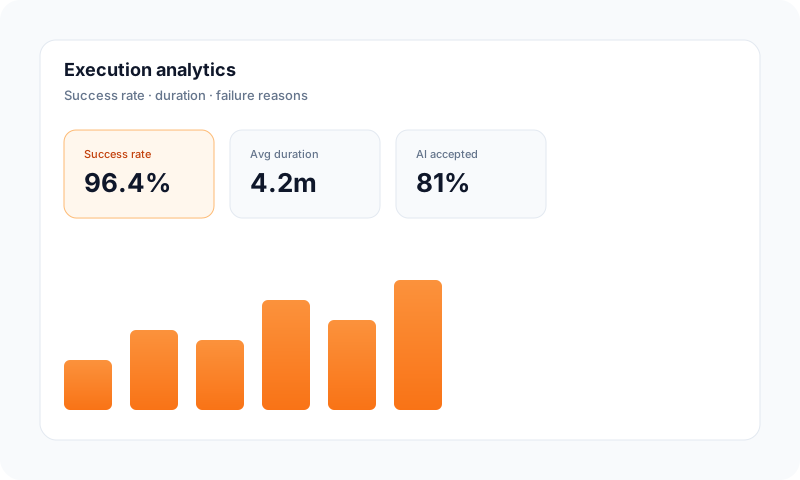
Dashboards surface workflow success rates, average execution time, failure reasons, and AI recommendation acceptance rate.
Integrations
Connects to your stack
 Slack
Slack
 Microsoft Teams
 ServiceNow
 Jira
Jira
 Azure DevOps
FAQ
Common questions
Can I version-control workflow definitions?
Yes – each change creates a new immutable version with diff view.
How does the platform handle failed steps?
Built-in retry policies and conditional branching allow graceful recovery or escalation.
Ready to modernize IT operations?
Launch a pilot workspace or book a walkthrough with our team.